TAAT e-catalog
for
private sector
https://taat.africa/com/technologies/bean-flour-and-flour-products-bean-processing-process
Bean Flour Made Easy
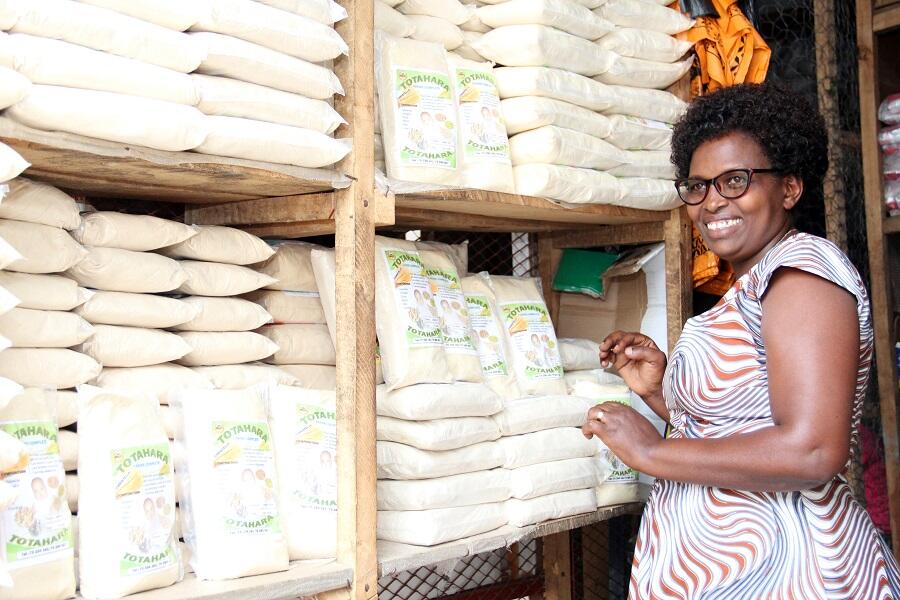
Bean flour and flour-based products" technology is a set of machines that facilitates the production of flour derived from common beans. It transforms whole beans into a finely ground, powdery form that can be used in the creation of a diverse range of food products. This technology improves the digestibility and nutritional qualities of common beans, increasing their appeal to consumers. It also extends the shelf life of bean products, and offers economic opportunities to farmers and entrepreneurs by creating a lucrative market for bean flour and related food products. The technology is applicable to both rural and urban communities, and can be implemented using a range of equipment, from small manual systems for cottage-level production to larger automated facilities for industrial-scale processing. It plays a key role in improving food self-sufficiency, business development and the overall use of common beans in a variety of food products.
This technology is TAAT1 validated.
Bean flour per kg
Soaking tanks of 500 liter
Mills with a capacity of 300 kg hour-1
Open source / open access
Limited consumer appeal: Long cooking times and high energy requirements make traditional bean products less convenient for consumers, particularly in urban markets.
Nutritional and digestibility constraints: Naturally occurring compounds in common beans can reduce nutrient bioavailability and digestibility if beans are not appropriately processed.
Limited product diversification: Reliance on whole-bean products restricts opportunities for processors to develop convenient bean-based foods and reach broader consumer markets.
Convenient bean products: Processing beans into flour reduces preparation and cooking time, enabling the development of convenient products for changing consumer preferences.
Improved nutritional quality: Appropriate processing reduces antinutritional compounds and improves digestibility and nutrient bioavailability in bean-based foods.
Expanded product opportunities: Bean flour can be used in a range of food products, enabling processors to diversify their product portfolio and access broader consumer markets.
For Manufacturers
The bean flour processing streamlines the preparation of common beans, offering substantial time and cost savings. It involves wet and dry milling procedures, providing a diverse range of bean-based products for both rural and urban communities.
In order to make this venture successful, you need to identify reliable suppliers for manufacturing machines and obtaining the necessary raw materials. Optimize costs, expand offerings, and enter the market smoothly with simple machinery and minimal licensing.
Your potential customers are small-scale farmers, agro-manufactures, development projects, government agencies, and NGOs.
Collaboration with local farmers and agri-food companies for a reliable bean supply chain, ensuring sustainable sourcing for consistent high-quality bean flour production.
Cost considerations include efficient processing equipment, ranging from small motorized bean dehullers (US $370) to larger automated systems for industrial-scale processing (starting from US $3,000). Optimize costs with flexible pricing strategies aligned with consumer demand.
For resellers
Resellers can capitalize on the demand for diverse, gluten-free, and nutritious options, bean flour processing offers versatility and cost-effectiveness in various food products.
To successfully navigate this market, you need to position your business at the forefront of the growing demand for bean flour and processed products. Emphasize versatility, collaborate for a steady supply, and navigate licensing requirements smoothly.
Your potential customer targets should be a broad customer base, from health-conscious urbanites to budget-conscious rural communities looking for various bean-based products. Emphasize bean flour's versatility and cost-effectiveness in various food products.
Establishing strong partnerships with local processors and farmers for a steady supply of high-quality bean flour. Explore strategic partnerships to expand product offerings and distribution reach.
Procurement costs for resellers involve the implementation of flexible models to cater to different market segments. Maximize profit margins with affordable production costs and a variety of packaging options.
For users
Bean flour processing enhances culinary experiences by offering unparalleled convenience and health benefits.
End-users of bean flour and flour products can save time and money while enjoying the health benefits of the products.
The primary customers are health conscious individuals seeking gluten-free alternatives. Highlighting time and cost savings in meal preparation for busy urbanites and health-conscious homemakers.
Users can be supplied by local businesses that offer a range of flour products, from bread and pastries to soups and sauces.
Adults 18 and over: Positive high
The poor: Positive low
Under 18: Positive low
Women: Positive high
Climate adaptability: Highly adaptable
Farmer climate change readiness: Significant improvement
Environmental health: Moderately improves environmental health
Soil quality: Does not affect soil health and fertility
Water use: Same amount of water used
Biodiversity: Not verified
Carbon footprint: More carbon released
Scaling Readiness describes how complete a technology's development is and its ability to be scaled. It produces a score that measures a technology's readiness along two axes: the level of maturity of the idea itself, and the level to which the technology has been used so far.
Each axis goes from 0 to 9 where 9 is the “ready-to-scale” status. For each technology profile in the e-catalogs we have documented the scaling readiness status from evidence given by the technology providers. The e-catalogs only showcase technologies for which the scaling readiness score is at least 8 for maturity of the idea and 7 for the level of use.
The graph below represents visually the scaling readiness status for this technology, you can see the label of each level by hovering your mouse cursor on the number.
Read more about scaling readiness ›
Semi-controlled environment: prototype
Common use by projects NOT connected to technology provider
| Maturity of the idea | Level of use | |||||||||
| 9 | ||||||||||
| 8 | ||||||||||
| 7 | ||||||||||
| 6 | ||||||||||
| 5 | ||||||||||
| 4 | ||||||||||
| 3 | ||||||||||
| 2 | ||||||||||
| 1 | ||||||||||
| 1 | 2 | 3 | 4 | 5 | 6 | 7 | 8 | 9 | ||
| Project | Countries | Beneficiaries | Budget (USD) & duration | Key figures |
|---|---|---|---|---|
|
ENSURE Enabling Environments for Sustainable Regional Agriculture Extension |
|
|
13.14 million 2024–2027 |
|
Figures in italic are from project plans and may change during implementation.
| Country | Testing ongoing | Tested | Adopted |
|---|---|---|---|
| Benin | –No ongoing testing | Tested | Adopted |
| Burkina Faso | –No ongoing testing | Tested | Adopted |
| Burundi | –No ongoing testing | Tested | Adopted |
| Central African Republic | –No ongoing testing | Tested | Adopted |
| Côte d’Ivoire | –No ongoing testing | Tested | Adopted |
| Democratic Republic of the Congo | –No ongoing testing | Tested | Adopted |
| Ethiopia | –No ongoing testing | Tested | Adopted |
| Kenya | –No ongoing testing | Tested | Adopted |
| Malawi | –No ongoing testing | Tested | Adopted |
| Nigeria | –No ongoing testing | Tested | Adopted |
| Rwanda | –No ongoing testing | Tested | Adopted |
| Senegal | –No ongoing testing | Tested | Adopted |
| Tanzania | –No ongoing testing | Tested | Adopted |
| Uganda | –No ongoing testing | Tested | Adopted |
This technology can be used in the colored agro-ecological zones. Any zones shown in white are not suitable for this technology.
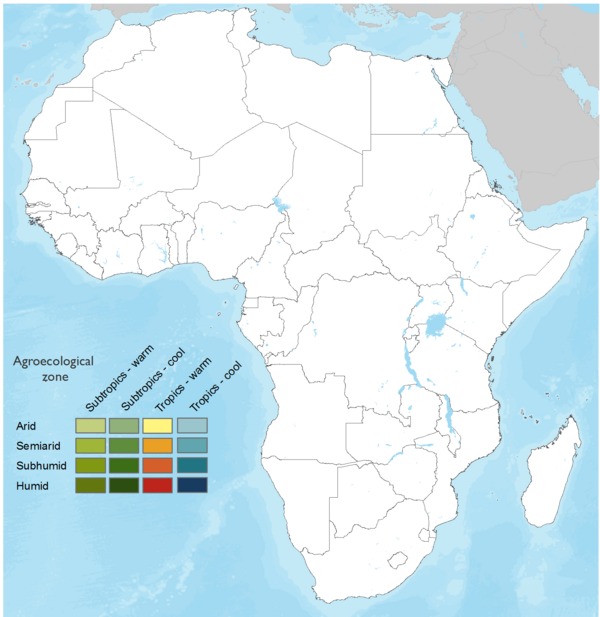





| AEZ | Subtropic - warm | Subtropic - cool | Tropic - warm | Tropic - cool |
|---|---|---|---|---|
| Arid | – | – | – | – |
| Semiarid | – | – | – | – |
| Subhumid | – | – | ||
| Humid |
Source: HarvestChoice/IFPRI 2009
The United Nations Sustainable Development Goals that are applicable to this technology.


The following steps are required to make most of bean flour for a wide range of culinary applications and food products, adding nutritional value and diversity to your cooking.
1. Choose Your Bean Flour: Select bean flour produced through either wet or dry milling, depending on your intended use.
2. Decide on Your Recipe: Determine the recipe or food product you want to prepare using bean flour.
3. Baking and Cooking: For Baking (Bread, Pastry, Porridge), If you're making bread, pastry, or porridge, use bean flour as an all-purpose, gluten-free ingredient. Blend it with cereal flour to achieve the desired texture and taste.
4. Food Texturing: For Food Texturing (Crisps, Pasta), Use pure bean flour as a texturing ingredient for crisps and pasta to enhance their texture and nutritional value.
5. Thickening Soups, Sauces, and Beverages: For Thickening (Soups, Sauces, Beverages), Incorporate bean flour as a thickener for soups, sauces, and beverages to add body and creaminess to your dishes.
6. Meat Analogues: For Meat Analogues (Protein Replacement), Utilize bean flour as a protein replacement in meat analogues, enhancing their nutritional content and making them suitable for vegetarians and vegans.
Last updated on Sep 22, 2026
This technology can be used in the colored agro-ecological zones.







Bean Flour and Flour Products: Bean processing process
https://taat.africa/com/technologies/bean-flour-and-flour-products-bean-processing-process
Last updated on 22 September 2026, printed on Oct 8, 2026
Enquiries e-catalogs@taat.africa