
TAAT e-catalog
for
private sector
https://taat.africa/com/technologies/processing-chicken-meat-for-cold-storage
Preserving Quality, Expanding Opportunity: Value Addition for Poultry
The “Processing chicken meat for cold storage” technology is a systematic approach to poultry processing. It involves the use of mechanized equipment for secondary processing of raw chicken into value-added products, such as cleaned, pre-cut, and preserved chicken meat. This technology also incorporates cold storage facilities, which allow for long-term storage and long-distance transport of the processed poultry products. Designed to be accessible to small and medium enterprises, farmers can form cooperatives to raise sufficient capital and volumes for the processing plant.
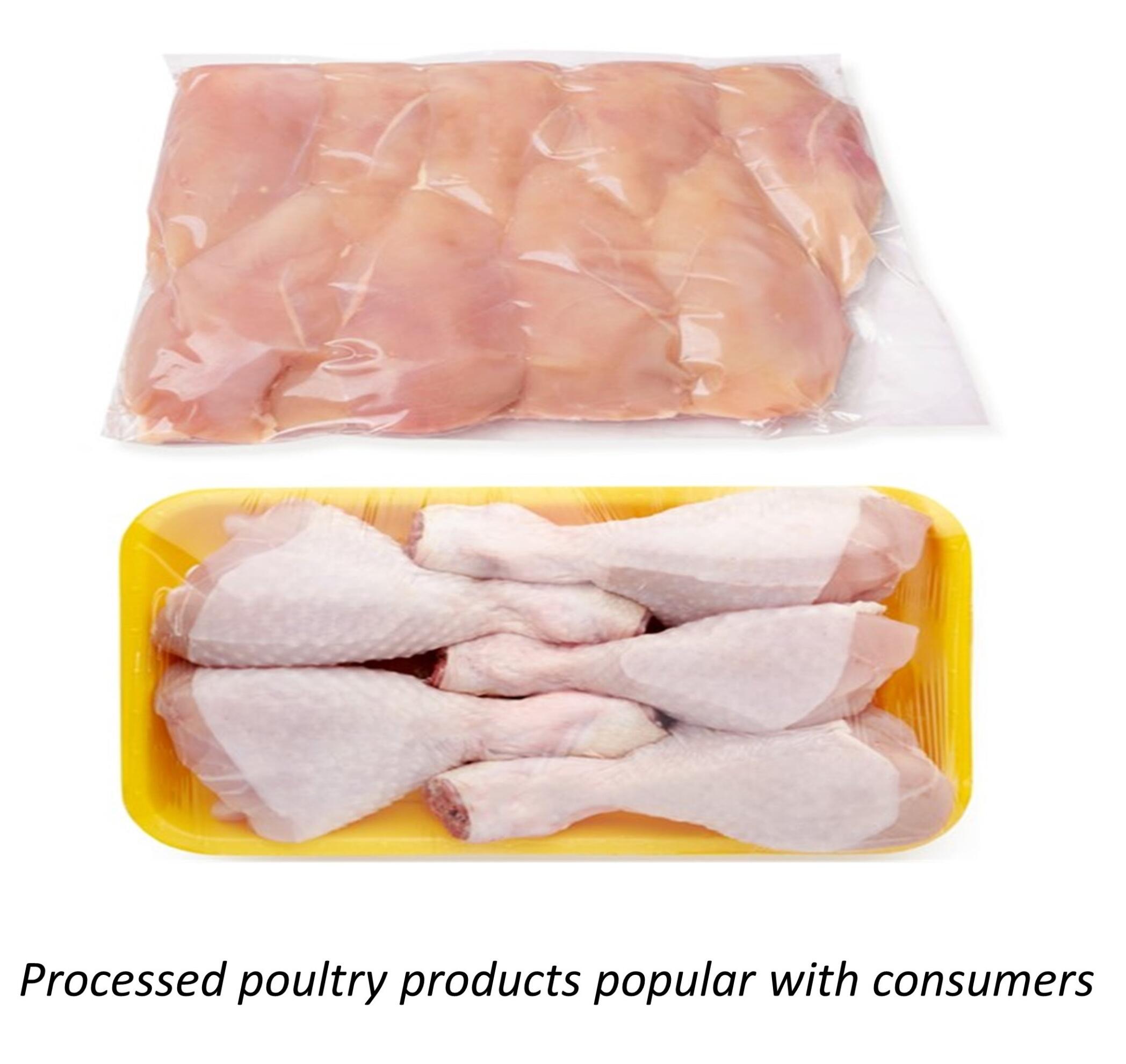
This technology is TAAT1 validated.
basic processing plant with defeathering, cutting and storage lines for 500 chicken per day
Unknown
Low value capture: Reliance on live-bird sales and on-site slaughter limits opportunities for producers and processors to obtain higher returns from processed poultry products.
Limited processing and cold-chain capacity: Inadequate processing technology, skills and cold-storage facilities constrain product preservation, production volumes and access to wider markets.
Unmet market demand: Limited processing capacity restricts the supply and range of ready-to-cook and precooked chicken products demanded by households, institutions and restaurants.
Food safety risks: On-site slaughter and inadequate processing and preservation practices increase hygiene and public health risks.
Increased value addition: Cutting, deboning, portioning and further processing transform whole chickens into a wider range of higher-value poultry products.
Expanded processing and storage capacity: Mechanized equipment supports higher processing volumes, while refrigeration and cold storage extend product preservation and distribution.
Diversified product range: Processing enables ready-to-cook, precut, marinated and other poultry products adapted to different consumer and market requirements.
Improved food safety: Standardized processing, hygienic packaging and rapid chilling help maintain product quality and reduce food safety risks.
For Entrepreneurs
Starting a poultry processing plant offers several advantages for business owners. It provides a steady stream of revenue by processing and selling poultry products. Processing allows access to a wider consumer base, enhancing market reach and potential profits.
To integrate the Processing chicken meat for cold storage in your business, follow these steps:
Laws and Regulations: When starting a poultry processing business, it’s crucial to comply with food safety regulations and obtain the necessary permits and licenses. Legal requirements vary by region, so understanding local laws is essential.
Target Market and Sales Strategies: Identify your target market—whether it’s retail consumers, restaurants, or other businesses. Tailor your product offerings and sales strategies accordingly. Consider factors like pricing, packaging, and distribution channels.
Location and Infrastructure: Choose a suitable location for your processing plant. Access to clean water, reliable electricity, and waste disposal facilities is critical. The site should also accommodate the necessary equipment and allow for efficient operations.
Equipment and Staff Training: Invest in the right equipment for poultry processing. Machines for cutting, deboning, chilling, and refrigeration are essential. Proper staff training ensures efficient and safe handling of equipment.
Quality Assurance Procedures: Implement quality control measures throughout the processing chain. Regular inspections, hygiene protocols, and adherence to industry standards are vital for maintaining product quality.
Cost Considerations: Costs depend on factors like plant capacity, location, and miscellaneous expenses. Budget for equipment purchase, facility setup, and ongoing operational costs.
Adults 18 and over: Positive high
The poor: Positive medium
Under 18: Positive medium
Women: Positive high
Climate adaptability: Moderately adaptable
Farmer climate change readiness: Significant improvement
Biodiversity: No impact on biodiversity
Carbon footprint: A bit less carbon released
Environmental health: Greatly improves environmental health
Water use: Much less water used
Scaling Readiness describes how complete a technology's development is and its ability to be scaled. It produces a score that measures a technology's readiness along two axes: the level of maturity of the idea itself, and the level to which the technology has been used so far.
Each axis goes from 0 to 9 where 9 is the “ready-to-scale” status. For each technology profile in the e-catalogs we have documented the scaling readiness status from evidence given by the technology providers. The e-catalogs only showcase technologies for which the scaling readiness score is at least 8 for maturity of the idea and 7 for the level of use.
The graph below represents visually the scaling readiness status for this technology, you can see the label of each level by hovering your mouse cursor on the number.
Read more about scaling readiness ›
Uncontrolled environment: tested
Common use by projects NOT connected to technology provider
| Maturity of the idea | Level of use | |||||||||
| 9 | ||||||||||
| 8 | ||||||||||
| 7 | ||||||||||
| 6 | ||||||||||
| 5 | ||||||||||
| 4 | ||||||||||
| 3 | ||||||||||
| 2 | ||||||||||
| 1 | ||||||||||
| 1 | 2 | 3 | 4 | 5 | 6 | 7 | 8 | 9 | ||
| Country | Testing ongoing | Tested | Adopted |
|---|---|---|---|
| Benin | –No ongoing testing | Tested | Adopted |
| Botswana | –No ongoing testing | Tested | Adopted |
| Burundi | –No ongoing testing | Tested | Adopted |
| Central African Republic | –No ongoing testing | Tested | Adopted |
| Côte d’Ivoire | –No ongoing testing | Tested | Adopted |
| Democratic Republic of the Congo | –No ongoing testing | Tested | Adopted |
| Ethiopia | –No ongoing testing | Tested | Adopted |
| Gabon | –No ongoing testing | Tested | Adopted |
| Ghana | –No ongoing testing | Tested | Adopted |
| Guinea | –No ongoing testing | Tested | Adopted |
| Kenya | –No ongoing testing | Tested | Adopted |
| Madagascar | –No ongoing testing | Tested | Adopted |
| Malawi | –No ongoing testing | Tested | Adopted |
| Mozambique | –No ongoing testing | Tested | Adopted |
| Niger | –No ongoing testing | Tested | Adopted |
| Nigeria | –No ongoing testing | Tested | Adopted |
| Rwanda | –No ongoing testing | Tested | Adopted |
| Senegal | –No ongoing testing | Tested | Adopted |
| Sierra Leone | –No ongoing testing | Tested | Adopted |
| Somalia | –No ongoing testing | Tested | Adopted |
| South Sudan | –No ongoing testing | Tested | Adopted |
| Tanzania | –No ongoing testing | Tested | Adopted |
| Uganda | –No ongoing testing | Tested | Adopted |
| Zambia | –No ongoing testing | Tested | Adopted |
| Zimbabwe | –No ongoing testing | Tested | Adopted |
This technology can be used in the colored agro-ecological zones. Any zones shown in white are not suitable for this technology.
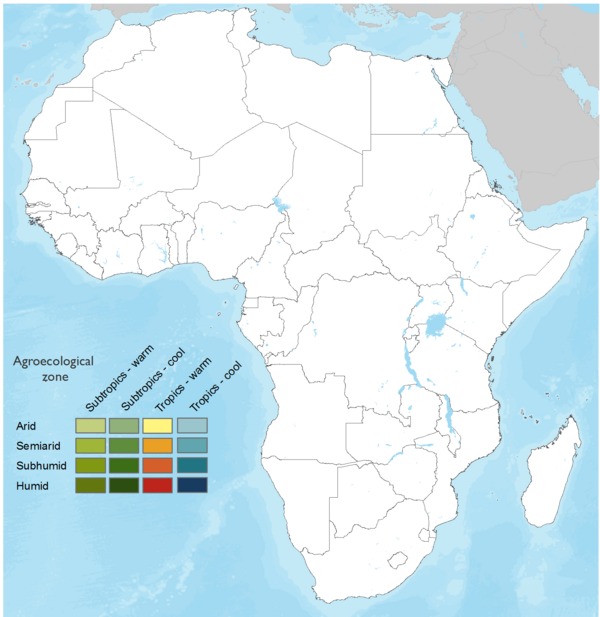












| AEZ | Subtropic - warm | Subtropic - cool | Tropic - warm | Tropic - cool |
|---|---|---|---|---|
| Arid | ||||
| Semiarid | ||||
| Subhumid | ||||
| Humid |
Source: HarvestChoice/IFPRI 2009
The United Nations Sustainable Development Goals that are applicable to this technology.
Poultry Farming: Start with poultry farming to ensure a steady supply of chickens for processing.
Secondary Processing: Use mechanized equipment such as small electric slicers, deboning machines, and grinders to transform whole raw chicken into value-added products. This includes cleaning, pre-cutting, and preserving the chicken meat.
Hygiene and Quality Control: Maintain strict hygiene and quality norms during the processing of poultry products to promote marketing and consumption patterns.
Cold Storage: Rapidly cool the processed poultry products to 4°C within two hours after slaughter. This can be achieved through different combinations of forced air, water immersion, spray, or vacuum chilling.
Packaging: Package the processed poultry products for storage, transport, and marketing. This can be done using wrapped trays or airtight packages, each serving different markets. Chamber-style vacuum sealers can be used for strict portion control, long shelf-life, and high food hygiene.
Commercialization: Finally, market and sell the processed poultry products to consumers.
Last updated on Sep 22, 2026
This technology can be used in the colored agro-ecological zones.


















Processing chicken meat for cold storage
https://taat.africa/com/technologies/processing-chicken-meat-for-cold-storage
Last updated on 22 September 2026, printed on Oct 8, 2026
Enquiries e-catalogs@taat.africa