Logo
TAAT e-catalog for government
https://taat.africa/gov/technologies/riceadvice-digital-support
Request information View pitch brochure

RiceAdvice digital support

Your Digital Guide to Better Harvests

RiceAdvice is an interactive decision support tool that generates guidelines based on farmers' responses to multiple choice questions about farm conditions, soil management, nutrient inputs, and more. It takes about 10 minutes to complete and can be done by extension agents or farmers themselves. The app identifies optimal types, amounts, and application times for inorganic fertilizers, helping farmers maximize their investments. It also provides agronomic modules to set yield objectives within budget constraints and recommends efficient weed control strategies.
This technology is TAAT1 validated.

8•8

Scaling readiness: idea maturity 8/9; level of use 8/9

Adults 18 and over: Positive low

The poor: Positive low

Under 18: Positive high

Women: Positive low

Climate adaptability: Highly adaptable

Farmer climate change readiness: Significant improvement

Problem

  • Inefficient Nutrient Management: Farmers often struggle with determining the right amount and type of fertilizer to use, which can lead to suboptimal yields and wasted resources.
  • Weed Infestation: Weeds can significantly reduce crop yields, but effective weed management strategies are not always readily available or known to farmers.
  • Unclear Yield Targets and Crop Calendars: Farmers may lack specific, field-tailored advice on target yields and crop calendars, leading to inefficient farming practices.
  • Climatic Risks: Farmers face challenges in adapting their farming practices to cope with climatic risks, such as droughts or floods.
  • Lack of Offline Resources: In areas with limited internet connectivity, farmers may lack access to crucial agricultural advice and resources.

Solution

  • Optimal Nutrient Management: The app provides advice for efficient application of mineral fertilizer to optimize production and profits, and reduce waste.
  • Weed Management: It includes a tool called “RiceAdvice-WeedManager” that provides guidelines for effective weed management.
  • Target Yield and Crop Calendar: The app generates guidelines for target yield, nutrient management, and crop calendar based on farmers’ answers to multiple choice questions on farm conditions, crop management practices, and market.
  • Coping with Climatic Risks: The app helps farmers better cope with climatic risks.
  • Offline Use: Although an active internet connection is required from time to time to synchronize information with the database server, the app can be largely used without any internet connection. This is particularly useful in areas with limited internet connectivity.

Key points to design your project

RiceAdvice: Revolutionizing Rice Farming

"RiceAdvice" is a digital application that provides field-specific management guidelines for rice production, addressing challenges such as inefficient nutrient management, weed infestation, unclear yield targets, climatic risks, and lack of offline resources. It revolutionizes rice farming by optimizing production, profits, and reducing waste.

Integrating RiceAdvice into Your Project

To integrate this technology into your project, follow these steps:

  • Download and Install: The RiceAdvice app can be freely downloaded from the Google Play Store. Install it on smart devices that will be used in the field. Consider the cost of Android phones and data access when planning your project budget.
  • Set Up: Set up the app by inputting information about the farm conditions, crop management practices, and market to generate field-specific advice.
  • Service Farmers:
    • Train extension agents: Since the technology involves digital tools, training is essential. A team of trainers could provide support throughout the project, including post-training.
    • Utilize extension agents: Use the app with trained extension agents to provide farmers within the operational area with advice on nutrient management, weed management, target yield, crop calendar, and coping with climatic risks. Site visits by these agents may be necessary to help farmers access the tools, complete the questionnaires within the app, and understand the recommendations. These visits will attract costs for personnel and travel that need to be covered by national extension services, or fees from commercial agricultural service providers, or a mix of public and private funds.
  • Monitor and Evaluate: Monitor the implementation and evaluate the effectiveness of the advice provided by the app. Make necessary adjustments based on feedback and results.
  • Promote Adoption: Develop communication materials like flyers, videos, and radio broadcasts to promote the technology's adoption among farmers.

Collaboration is Key

To implement the technology in your country, explore collaborations with agricultural development institutes, rice research organizations, and digital technology providers. Their expertise can be invaluable in training extension agents, promoting the app to farmers, and potentially even customizing the app for local conditions.

By following these steps and fostering collaboration, you can leverage the power of RiceAdvice to empower rice farmers and revolutionize rice production in your country.

0.6—1.8 ton per hectar

Average grain yield

IP

Open source / open access

Scaling Readiness describes how complete a technology’s development is and its ability to be scaled. It produces a score that measures a technology’s readiness along two axes: the level of maturity of the idea itself, and the level to which the technology has been used so far.

Each axis goes from 0 to 9 where 9 is the “ready-to-scale” status. For each technology profile in the e-catalogs we have documented the scaling readiness status from evidence given by the technology providers. The e-catalogs only showcase technologies for which the scaling readiness score is at least 8 for maturity of the idea and 7 for the level of use.

The graph below represents visually the scaling readiness status for this technology, you can see the label of each level by hovering your mouse cursor on the number.

Read more about scaling readiness ›

Scaling readiness score of this technology

Maturity of the idea 8 out of 9

Uncontrolled environment: tested

Level of use 8 out of 9

Used by some intended users, in the real world

Maturity of the idea Level of use
9
8
7
6
5
4
3
2
1
1 2 3 4 5 6 7 8 9

Enabling Environments for Sustainable Regional Agriculture Extension (ENSURE)

  • Project funder: African Development Bank & East Africa Community
  • Planned Budget: USD 13.14 million
  • Location: East African Community (Burundi, DRC, Kenya, Rwanda, South Sudan, Tanzania, Uganda)
  • Planned duration: 2024–2027
  • Deployment means: On-farm demonstrations, training, digital tools (SMS, IVR, video, radio, pictorial guides), bundled inputs + advisory services, Training of Trainers (ToT)
  • Project main implementer: East African Community (EAC)
  • Project Description: Strengthen agricultural extension systems using digital tools, private-sector approaches, regional coordination, and multi-commodity focus (maize, cassava, rice, drought-resilient crops).
  • Objective: Promote regional extension, enhance advisory services, scale climate-smart technologies, build sustainable private sector–led extension systems, strengthen policy and regulatory frameworks.
  • Expected outcome: Increased adoption of improved technologies, improved farmer productivity and profitability, enhanced access to quality inputs and pest management solutions, strengthened resilience to climate and pest risks, regional market integration, job creation for youth and agripreneurs.
  • Figures of adoption: Target 3 million farmers reached over 4 years, digital extension pilots in 7 EAC states, training of extension agents, lead farmers, cooperatives, and youth agripreneurs, rollout of Pest Information Management Systems (PIMS).
  • Profiles of adopters: Smallholder farmers, women, youth agripreneurs, cooperatives and producer organizations, public and private extension agents, National Plant Protection Officers (NPPOs).
  • Lessons learnt: System-level approaches needed beyond technology delivery, digital tools most effective with in-person facilitation, supportive policy/regulatory environment critical, regional harmonization boosts scalability and cross-border diffusion of technologies. 

Projet d’Appui au Développement des Chaînes de Valeurs en soutien au Programme de Transformation de l’Agriculture (PADCV-PTA)

  • Project funder: African Development Bank
  • Planned Budget: USD 311.609 million
  • Location: 6 provinces in Congo (Kongo Central, Kwango, Maï-Ndombe, Kasaï Oriental, Lomami, Sud-Kivu)
  • Planned duration: 2024–2029
  • Deployment means: Direct access to improved seeds and planting materials, seed system strengthening (INERA, SENASEM, multipliers), Farmer Field Schools and demonstration plots (1,600 sites), strengthened public extension (SNV), training/capacity building, subsidized or cost-shared inputs and equipment, irrigation infrastructure (5,200 ha), rural road rehabilitation (600 km), contract farming and private sector partnerships
  • Project main implementer: Social Fund of the Democratic Republic of the Congo
  • Project Description: Implements the National Pact for Food and Agriculture (PNAA) using an integrated value chain approach combining technology access (seeds, practices), infrastructure development (irrigation, roads), extension services, farmer organization, finance, and market access to boost productivity, reduce imports, strengthen resilience, and structure agricultural value chains.
  • Objective: Restore national seed capital, scale improved and climate-resilient technologies, increase productivity, facilitate access to inputs/advisory/markets/finance, promote climate-smart agriculture, strengthen farmer organizations and value chain governance, reduce food imports, and enhance resilience to climate shocks and conflict.
  • Expected outcome: ~80% crop yield increase (rice, cassava, maize, soybean), 1.68 million tons/year additional production, expansion of irrigated rice, improved access to seeds/inputs, stronger farmer organizations, better post-harvest handling and market integration, increased private sector engagement, reduced food imports, improved national food security.
  • Figures of adoption: 900,000 farming households directly supported, ~295,000 ha cultivated with improved seeds, 5,200 ha irrigated rice, 600 km rural roads rehabilitated, 1,600 FFS/demonstration plots, 2 million households indirectly benefiting, +4.1 million tons private sector processing, ~1.68 million tons annual production increase
  • Profiles of adopters: Smallholder farmers, women farmers (100% of women-headed households in target areas), youth/agripreneurs, internally displaced persons (IDPs) in South Kivu, seed producers, cooperatives, farmer organizations/inter-professional associations, public extension services, local authorities
  • Lessons learnt: Infrastructure (irrigation, roads) and market access are critical for adoption, seed system reform is a bottleneck, contract farming/aggregation incentivizes adoption, combining inputs + extension + finance accelerates impact, governance and institutional coordination are key for scaling and sustainability

Projet d'Urgence de Production et de Sécurite Alimentaire & Nutritionnelle (PUPSAN/AEFPF)

  • Project funder: African Development Bank (AfDB) Group – Transition Support Facility (TSF) loan and grant
  • Planned Budget: USD 7.040 million
  • Location: Republic of Mali
  • Planned duration: 2022–2024
  • Deployment means: Distribution of certified seeds and subsidized fertilizers, training for extension staff and farmers on climate-resilient practices, use of digital tools (tablets with Rice Advice and WeedMaster applications)
  • Project main implementer: Ministry of Rural Development (MDR) via Office Riz Ségou (ORS) and the PDIR-PD2 project management unit
  • Project Description: Emergency intervention to counter food insecurity by providing climate-resilient inputs, supporting the acquisition of 1,027.14 tons of seeds and 2,234 tons of fertilizers, and assisting national seed policy reforms
  • Objective: Increase agricultural production and reduce the negative impact of rising food and input prices on the Malian population
  • Expected outcome: Additional production of 11,145.6 tons of food products, yield increase of 30–50% across targeted crops
  • Figures of adoption: 35,274 producers targeted, 8,829 hectares cultivated, distribution of 1,027.14 tons of seeds and 2,234 tons of fertilizers
  • Profiles of adopters: Vulnerable producers including 30% women (10,582), 20% youth (7,054), 10% internally displaced persons (3,527)
  • Lessons learnt: Leveraging existing execution agencies accelerates startup, efficient procurement systems (advance actions, direct negotiation) are critical, and digitalization ensures transparency and traceability in input distribution

Emergency Food Production Programme in Côte d’Ivoire (2PAU-CI/AEFPF-CI)

  • Project funder: African Development Bank (AfDB), Japan International Cooperation Agency (JICA), Government of Ivory Coast
  • Planned Budget: USD 163.3 million (AfDB loan) and USD 73 million (JICA loan)
  • Location: Ivory Coast – flood-sensitive areas and major agro-ecological zones (semi-arid to sub-humid)
  • Planned duration: Aug 2022 – Dec 2023
  • Deployment means: Distribution of certified seeds and fertilizers, Master Trainer/farmer training, demonstration plots, digital platforms (E-Voucher, ICT tools)
  • Project main implementer: Ministry of State, Ministry of Agriculture and Rural Development (MEMINADER)
  • Project Description: Emergency response to the global food crisis, providing smallholders with high-quality inputs and advisory services to ensure food sovereignty
  • Objective: Reduce cereal imports, boost domestic rice, maize, and cassava production, increase agricultural resilience to climate shocks
  • Expected outcome: 30% increase in food production; targeted yield increases (Rice: 4.5–9 t/ha; Maize: 2.5–6 t/ha)
  • Figures of adoption: 2,279 tons maize seeds, 3,539 tons rice seeds, 134.4 million cassava cuttings, covering 246,870 hectares
  • Profiles of adopters: 800,000 smallholder farmers; minimum 30% women; inclusion of youth and vulnerable groups
  • Lessons learnt: High fertilizer prices and climate risks constrain adoption; weak seed policy frameworks are a bottleneck; success relies on TAAT technologies and strong institutional partnerships (CNRA, ANADER)

Countries with a green colour
Tested & adopted
Countries with a bright green colour
Adopted
Countries with a yellow colour
Tested
Countries with a blue colour
Testing ongoing
Egypt Equatorial Guinea Ethiopia Algeria Angola Benin Botswana Burundi Burkina Faso Democratic Republic of the Congo Djibouti Côte d’Ivoire Eritrea Gabon Gambia Ghana Guinea Guinea-Bissau Cameroon Kenya Libya Liberia Madagascar Mali Malawi Morocco Mauritania Mozambique Namibia Niger Nigeria Republic of the Congo Rwanda Zambia Senegal Sierra Leone Zimbabwe Somalia South Sudan Sudan South Africa Eswatini Tanzania Togo Tunisia Chad Uganda Western Sahara Central African Republic Lesotho
Countries where the technology is being tested or has been tested and adopted
Country Testing ongoing Tested Adopted
Benin No ongoing testing Tested Adopted
Burkina Faso No ongoing testing Tested Adopted
Côte d’Ivoire No ongoing testing Tested Adopted
Ghana No ongoing testing Tested Adopted
Mali No ongoing testing Tested Adopted
Nigeria No ongoing testing Tested Adopted
Senegal No ongoing testing Tested Adopted
Togo No ongoing testing Tested Adopted

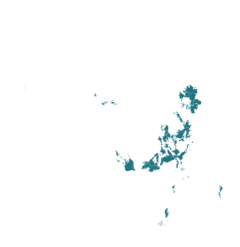
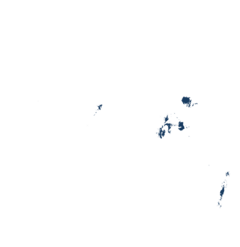
This technology can be used in the colored agro-ecological zones. Any zones shown in white are not suitable for this technology.
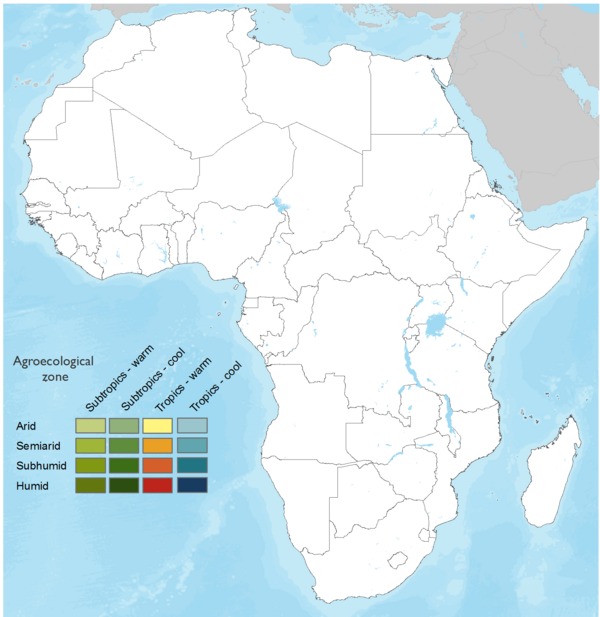

Agro-ecological zones where this technology can be used
AEZ Subtropic - warm Subtropic - cool Tropic - warm Tropic - cool
Arid
Semiarid
Subhumid
Humid

Source: HarvestChoice/IFPRI 2009

The United Nations Sustainable Development Goals that are applicable to this technology.
Sustainable Development Goal 1: no poverty
Goal 1: no poverty
Sustainable Development Goal 2: zero hunger
Goal 2: zero hunger
Sustainable Development Goal 8: decent work and economic growth
Goal 8: decent work and economic growth
Sustainable Development Goal 12: responsible production and consumption
Goal 12: responsible production and consumption
Sustainable Development Goal 13: climate action
Goal 13: climate action

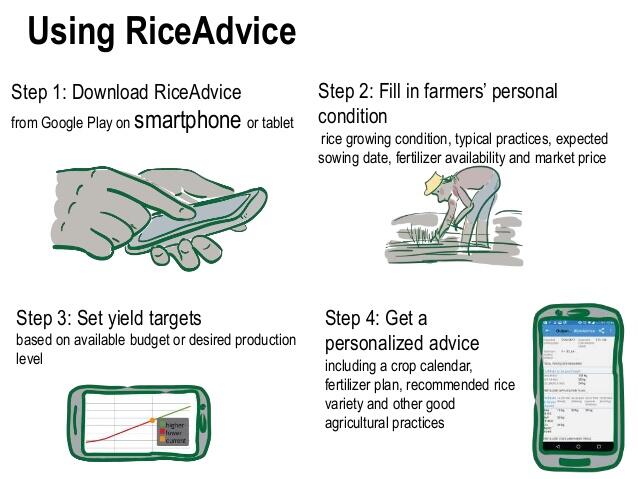
  1. Access the Application: Download and install the RiceAdvice app from the Google Play Store on your Android smartphone or tablet.

  2. Complete the Questionnaire: Provide information about your farm conditions, practices, planting schedule, available equipment, prevalent weed types, fertilizer availability, and market prices.

  3. Enter Budget and Yield Targets: Input the budget you have for investments and select your desired production level. This helps set yield targets.

  4. Receive Personalized Recommendations: The app will generate tailored recommendations on rice variety, fertilizer plan, and agronomic practices based on the information provided.

  5. Review and Select Preferences: Browse through the recommendations and select the options that best suit your specific circumstances and goals.

  6. Implementation and Monitoring: Apply the recommended practices in your rice cultivation. Monitor the progress and adjust as needed.

Last updated on 10 April 2026