TAAT e-catalog
for
government
https://taat.africa/gov/technologies/zai-pits-water-harvesting-and-soil-improvement
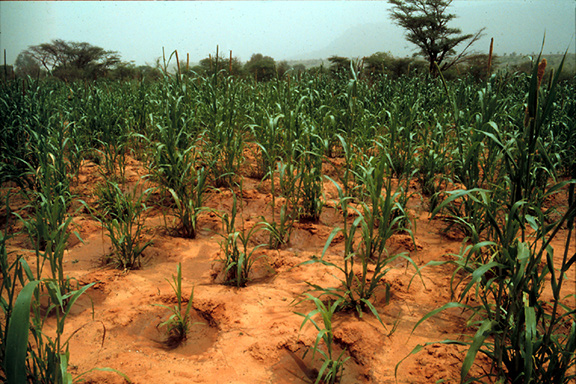
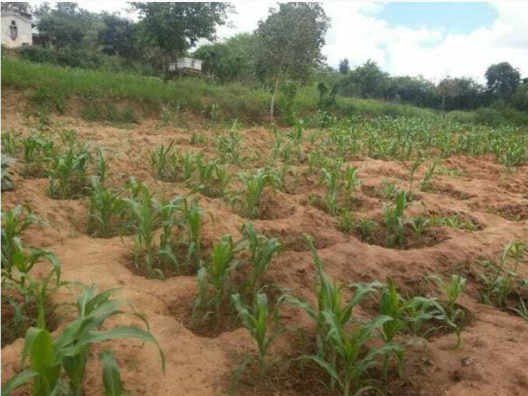
Zaï pits are an ancestral water-harvesting technique used in the Sahel to rehabilitate degraded lands. Farmers dig small basins (20–40 cm in diameter and 10–20 cm deep) during the dry season to trap rainwater, soil particles, and organic matter. Between 12,000 and 25,000 pits per hectare are typically dug, with excavated soil placed downslope to capture additional runoff. Each pit is enriched with organic matter (compost, manure, or straw) and mineral fertilizers (5–6 g of NPK or DAP per pit, totaling 72–144 kg per hectare). Millet or sorghum seeds are then planted at the center of the pit. This method enhances water infiltration, retains nutrients, and improves soil structure, ensuring better crop performance in arid environments. Zaï pits can be combined with other dryland techniques like stone bunds, half-moon structures, and tied ridges to maximize land restoration and agricultural productivity.
This technology is TAAT1 validated.
Adults 18 and over: Positive high
Increases food security and income for farming households by improving crop yields.
The poor: Positive medium
Requires minimal external inputs, making it affordable for resource-poor farmers. Increases food availability and reduces reliance on expensive fertilizers.
Under 18: Positive low
Youth can participate in land preparation, learning traditional farming techniques. However, labor intensity may discourage engagement.
Women: Positive medium
Women, who are often responsible for food production, benefit from improved soil fertility and yields. However, the labor-intensive nature of Zaï pits may pose challenges unless supported by community-based labor-sharing initiatives.
Climate adaptability: Highly adaptable
Increases resilience to droughts by improving water retention and soil fertility.
Farmer climate change readiness: Significant improvement
Encourages sustainable land management, reducing vulnerability to climate shocks.
Biodiversity: Positive impact on biodiversity
Can support soil microorganisms and plant diversity if combined with agroforestry or intercropping.
Carbon footprint: Much less carbon released
Enhances soil organic matter storage, contributing to carbon sequestration.
Environmental health: Greatly improves environmental health
Reduces soil erosion, prevents land degradation, and enhances ecosystem services.
Soil quality: Improves soil health and fertility
Improves soil structure, nutrient content, and organic matter levels.
Water use: Much less water used
Increases rainfall infiltration and reduces runoff, making better use of available water.
The Zaï Pit Implementation provides structured guidance for designing and scaling up the use of Zaï pits for land restoration and climate-resilient agriculture. It ensures a holistic approach by integrating financial, institutional, capacity-building, and technical aspects, making Zaï-based interventions sustainable, community-driven, and impactful. This framework helps governments, development organizations, and farming communities effectively adopt and expand the use of Zaï pits to enhance soil fertility, water retention, and agricultural productivity in dryland regions.
Define the Vision and Objectives
Develop a Financial Sustainability Plan
Assess Capacity and Technical Needs
Conduct a Needs Assessment
Implement Data Collection and Governance Strategies
Monitor and Evaluate Impact
By following these steps and leveraging the Zaï Pit Implementation, decision-makers can establish robust, scalable, and sustainable dryland farming solutions that drive land rehabilitation, food security, and climate resilience.
Yield Improvement
Open source / open access
| Project | Countries | Beneficiaries | Budget (USD) & duration | Key figures |
|---|---|---|---|---|
|
Agro-Industrial Zones Promotion of Sustainable Agricultural Value Chains in Special Agro-Industrial Processing Zones Program |
|
|
285.38 million 2024–2029 |
|
|
EFPP(AEFPF) Emergency Food Production Project (AEFPF) |
|
|
25.5 million 2022–2026 |
|
|
ENSURE Enabling Environments for Sustainable Regional Agriculture Extension |
|
|
13.14 million 2024–2027 |
|
|
SSEFPP-1 SSEFPP-1 Emergency Food Production Plan |
|
|
8.1 million 2022–2023 |
|
Figures in italic are from project plans and may change during implementation.
| Country | Testing ongoing | Tested | Adopted |
|---|---|---|---|
| Burkina Faso | Testing ongoing | Tested | Adopted |
| Chad | Testing ongoing | Tested | Adopted |
| Ghana | Testing ongoing | Tested | Adopted |
| Mali | Testing ongoing | Tested | Adopted |
| Mauritania | Testing ongoing | Tested | Adopted |
| Niger | Testing ongoing | Tested | Adopted |
| Nigeria | Testing ongoing | Tested | Adopted |
| Senegal | Testing ongoing | Tested | Adopted |
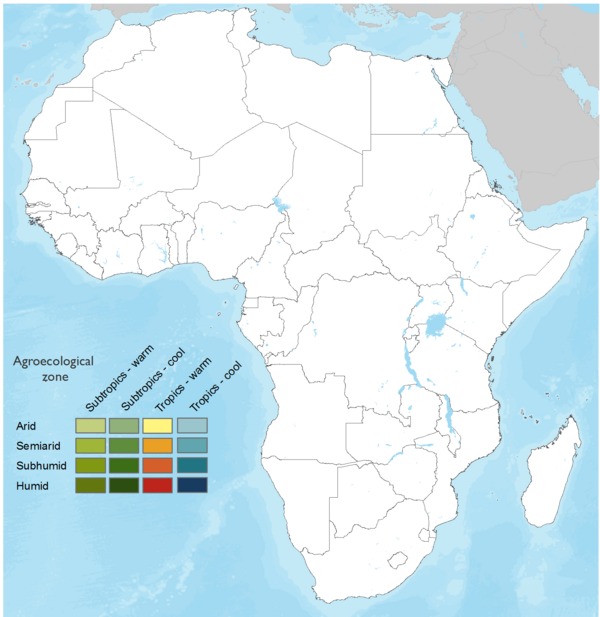
This technology can be used in the colored agro-ecological zones. Any zones shown in white are not suitable for this technology.

| AEZ | Subtropic - warm | Subtropic - cool | Tropic - warm | Tropic - cool |
|---|---|---|---|---|
| Arid | – | – | – | – |
| Semiarid | – | – | – | |
| Subhumid | – | – | – | – |
| Humid | – | – | – | – |
Source: HarvestChoice/IFPRI 2009
The United Nations Sustainable Development Goals that are applicable to this technology.

Enhances agricultural productivity, increasing incomes for smallholder farmers.
Improves food security by increasing millet and sorghum yields in drylands.

Supports women farmers but may require gender-sensitive labor-sharing mechanisms.
Reduces water runoff and enhances local water retention.

Improves climate resilience and supports adaptation to droughts.
Prevents land degradation, restores soil health, and supports sustainable land use.
Last updated on Aug 5, 2026
This technology can be used in the colored agro-ecological zones.



Zaï Pits: Water Harvesting and Soil Improvement
https://taat.africa/gov/technologies/zai-pits-water-harvesting-and-soil-improvement
Last updated on 5 August 2026, printed on Aug 25, 2026
Enquiries e-catalogs@taat.africa