TAAT e-catalog
for
government
https://taat.africa/gov/technologies/arica-advanced-rice-varieties-for-africa
Arica rice, the high yield, disease and stress tolerant rice
Hybrid ARICA lines are distinguished by their high yield potential, and tolerance/resistance to diseases and pests, such as blast, bacterial leaf blight, rice yellow mottle virus, as well as abiotic stresses like drought, flooding, iron toxicity, cold and salinity. Breeders employ a three-line system to develop ARICA hybrid lines, involving backcrossing which gives new cytoplasmic male sterile germplasm with good agronomic, next to outcrossing characteristics to obtain high seed yield, as well as test-crossing and microsatellite screening for identifying suitable restorer lines. A two-line breeding system for ARICA varieties is in place that relies on environmental genetic male sterility and has shown to achieve similar performance like the three-line system while being more economical. For breeding lines to be nominated as ARICA it must consistently and significantly out-yield the best checks in at least one site over at least three seasons and possess acceptable grain quality. In other words, it must represent significant improvement on the current best variety. Extensive field validation has shown that the productivity of ARICA 1, ARICA 2 and ARICA 3 is respectively 20 - 44%, 50 - 111%, and 2 - 69% greater than for NERICA-L 19 which is in wide use by African farmers.

This technology is TAAT1 validated.
Adults 18 and over: Positive high
ARICA’s higher yields and resilience mean fewer replanting cycles due to losses, improving farm efficiency and enabling better economic returns.
The poor: Positive medium
Reduced input needs due to disease and pest resistance lower costs, making it more feasible for low-income farmers to maintain productive crops and break cycles of poverty through more reliable harvests.
Under 18: Positive medium
Its reliability is crucial for children and youth, whose growth and development depend on stable, nutrient-rich diets.
Women: Positive high
The improved yield and disease resistance mean less labor-intensive crop management and fewer losses, potentially freeing time for women to engage in other income-generating activities.
Climate adaptability: Highly adaptable
Its adaptability helps ensure stable yields even in adverse weather, making rice farming more climate-resilient and reducing the likelihood of crop failures under variable conditions.
Farmer climate change readiness: Significant improvement
By offering rice varieties that tolerate environmental stresses and common pests, ARICA technology equips farmers with tools to face climate variability confidently.
Biodiversity: No impact on biodiversity
Carbon footprint: A bit less carbon released
ARICA's resilience to disease may lessen the frequency of pesticide applications, indirectly reducing emissions associated with their production and application.
Environmental health: Does not improve environmental health
Soil quality: Does not affect soil health and fertility
Water use: Same amount of water used
ARICA's drought-tolerant lines allow farmers to produce rice with less dependence on consistent water sources, thus conserving water resources.
Low Productivity: Many traditional rice varieties in Africa have low yield potential, leading to insufficient production to meet local demand.
Susceptibility to Pests and Diseases: Common rice diseases such as blast, bacterial leaf blight, and rice yellow mottle virus, as well as pests, significantly reduce yields and threaten food security.
Abiotic Stresses: Variability in environmental conditions, including drought, flooding, iron toxicity, cold, and salinity, pose significant challenges to rice cultivation in Sub-Saharan Africa, affecting crop growth and productivity.
Limited Adaptation: Traditional rice varieties often struggle to adapt to diverse agroecosystems across the region, resulting in suboptimal performance and reduced resilience to environmental stressors.
High Yield Potential: ARICA varieties offer higher yield potential compared to traditional varieties, boosting productivity and increasing agricultural profitability.
Disease and Pest Resistance: ARICA lines are bred for tolerance or resistance to common rice diseases and pests, reducing crop losses and ensuring more stable yields.
Abiotic Stress Tolerance: ARICA hybrids are developed to withstand various environmental stresses, such as drought, flooding, and salinity, ensuring more consistent yields even under adverse conditions.
Adaptability: ARICA varieties are designed to thrive in diverse agroecosystems, from lowland to highland areas and dry to wet climates, offering farmers more flexibility and resilience in their cropping systems.
Specialty Traits: Certain ARICA lines possess specialized traits, such as drought resistance, iron toxicity tolerance, and cold tolerance, allowing farmers to address specific challenges in their local and regional contexts.
The adoption of ARICA lines contributes to several Sustainable Development Goals (SDGs) including SDG 2 (Zero Hunger) by enhancing food security through increased rice productivity, SDG 1 (No Poverty) by improving income opportunities for rice farmers, and SDG 13 (Climate Action) by promoting climate-resilient agricultural practices.
To successfully incorporate the Advanced Rice Varieties for Africa (ARICA) into your project, the following activities and requirements should be considered:
A team of trainers could provide training and support during project installation. Include the cost for training and post-training support for using the technology.
Communication support for the promotion of the technology should be developed (flyers, videos, radio broadcasts, etc.)
In tandem with this technology, accompanying solutions include:
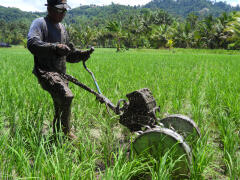
Deep urea placement (nitrogen management), Foliar micronutrient addition, Engineered irrigation surfacing (and water lifting), Motorized weeders (cut and burry paddy weeds), RiceAdvice digital support.
Consider the specicifity of each ARICA varieites:
| Varieties | Agro-ecology | Stade of maturity | Yield kgha-1 | Nutritious traits |
| ARICA 1 | Lowland | 101 | 6005 | Firm Texture |
| ARICA 2 | Lowland | 101 | 6674 | Firm Texture |
| ARICA 3 | Lowland | 101 | 7895 | Firm Texture |
| ARICA 4 | Upland | 120 | 4500 | Medium Texture |
| ARICA 5 | Upland | 110 | 3800 | Medium Texture |
| ARICA 6 | Lowland | 115 | 10000 | |
| ARICA 7 | Lowland | 119 | 12000 |
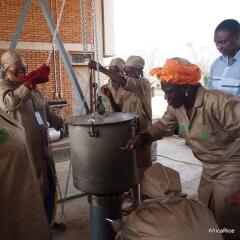
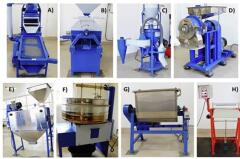
Planting, maintenance, harvesting and winnowing
Potential yield
Open source / open access
Scaling Readiness describes how complete a technology\’s development is and its ability to be scaled. It produces a score that measures a technology\’s readiness along two axes: the level of maturity of the idea itself, and the level to which the technology has been used so far.
Each axis goes from 0 to 9 where 9 is the “ready-to-scale” status. For each technology profile in the e-catalogs we have documented the scaling readiness status from evidence given by the technology providers. The e-catalogs only showcase technologies for which the scaling readiness score is at least 8 for maturity of the idea and 7 for the level of use.
The graph below represents visually the scaling readiness status for this technology, you can see the label of each level by hovering your mouse cursor on the number.
Read more about scaling readiness ›
Semi-controlled environment: prototype
Common use by projects NOT connected to technology provider
| Maturity of the idea | Level of use | |||||||||
| 9 | ||||||||||
| 8 | ||||||||||
| 7 | ||||||||||
| 6 | ||||||||||
| 5 | ||||||||||
| 4 | ||||||||||
| 3 | ||||||||||
| 2 | ||||||||||
| 1 | ||||||||||
| 1 | 2 | 3 | 4 | 5 | 6 | 7 | 8 | 9 | ||
| Project | Countries | Beneficiaries | Budget (USD) & duration | Key figures |
|---|---|---|---|---|
|
2PAU Emergency Food Production Programme |
|
|
161.96 million 2022–2023 |
|
|
BRIDEP Multinational - Projet de Développement Intégré Burundi-Rwanda |
|
|
139,09 million 2024 - 2031 |
|
|
EFPP Guinea Emergency Food Production Programme |
|
|
25.23 million 2022–2024 |
|
|
ENSURE Enabling Environments for Sustainable Regional Agriculture Extension |
|
|
13.14 million 2024–2027 |
|
|
ERAVCDP Eastern Region Agricultural Value Chain Development Project |
|
|
211.4 million 2026–2031 |
|
|
ESFSP Emergency Support to Food Security Project |
|
|
6.5 million 2022–2024 |
|
|
PADCV-PTA Projet d’Appui au Developpement des Chaines de Valeurs en soutien au Programme de Transformation de l’Agriculture |
|
|
321 million 2024–2029 |
|
|
PUPSAN Emergency Production and Food & Nutrition Security Project |
|
|
7.04 million 2023–2026 |
|
|
RVCTP Additional Financing to the Rice Value Chain Transformation Programme |
|
|
3.5 million 2022–2025 |
|
|
SAPZ-II Multinational- Promotion of Sustainable Agricultural Value Chains in Special Agro-Industrial Processing Zones |
|
|
625,00 million 2025–2030 |
|
|
SEPAREF Strengthening Emergency Preparedness and Response to Food Crisis |
|
|
10.56 million 2022–2025 |
|
Figures in italic are from project plans and may change during implementation.
| Country | Testing ongoing | Tested | Adopted |
|---|---|---|---|
| Benin | –No ongoing testing | Tested | Adopted |
| Burkina Faso | –No ongoing testing | Tested | Adopted |
| Côte d’Ivoire | –No ongoing testing | Tested | Adopted |
| Equatorial Guinea | –No ongoing testing | –Not tested | Adopted |
| Ethiopia | –No ongoing testing | Tested | Adopted |
| Gambia | –No ongoing testing | Tested | Adopted |
| Ghana | –No ongoing testing | Tested | Adopted |
| Guinea-Bissau | –No ongoing testing | Tested | –Not adopted |
| Kenya | –No ongoing testing | Tested | Adopted |
| Mali | –No ongoing testing | Tested | Adopted |
| Mauritania | –No ongoing testing | Tested | Adopted |
| Nigeria | –No ongoing testing | Tested | Adopted |
| Senegal | –No ongoing testing | Tested | Adopted |
| Uganda | –No ongoing testing | Tested | Adopted |
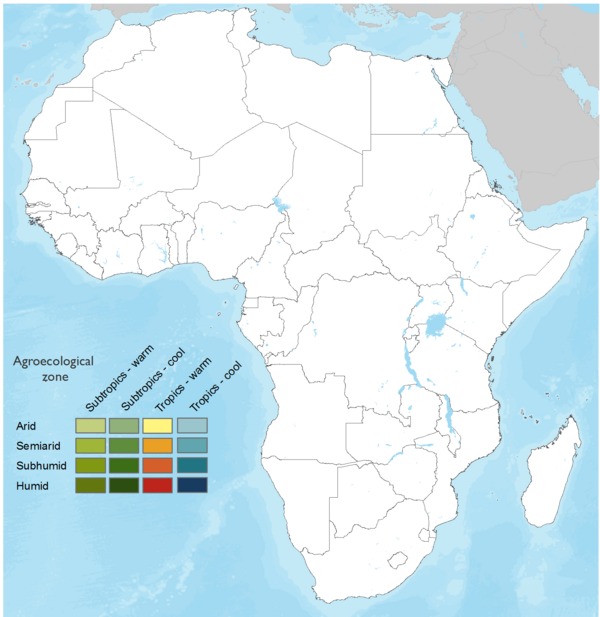
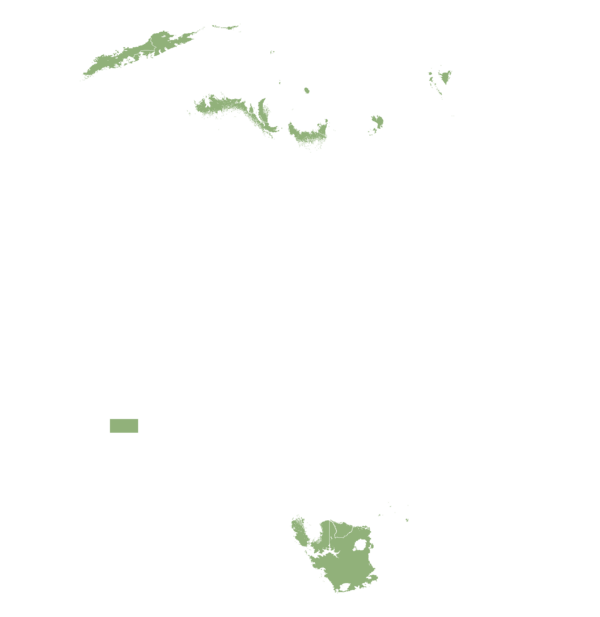
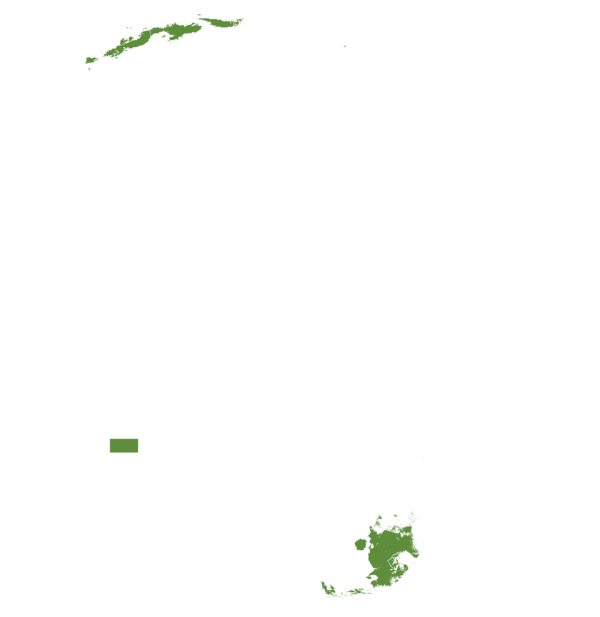
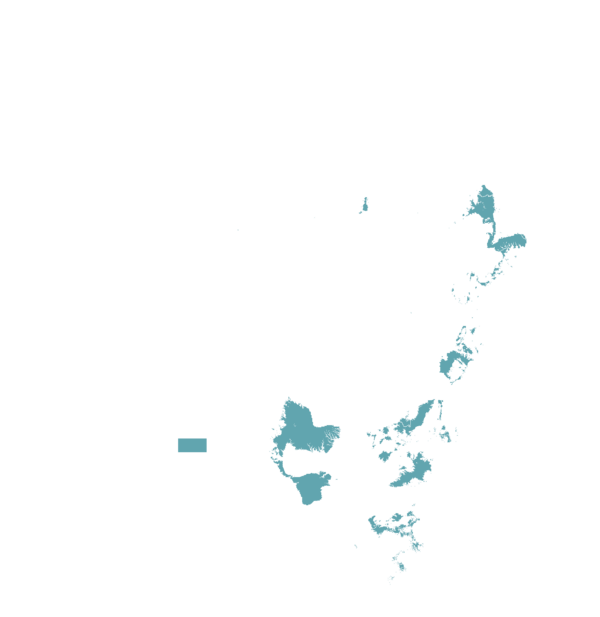
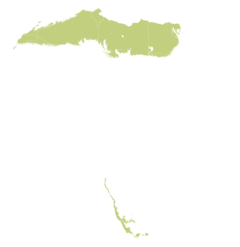
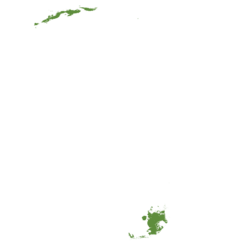
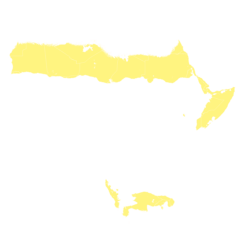
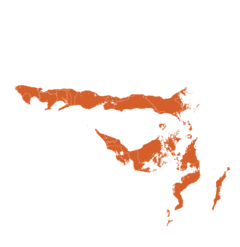
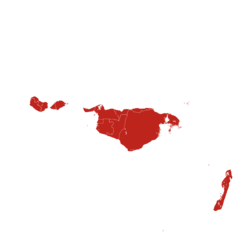
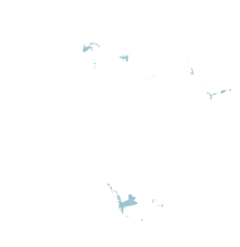
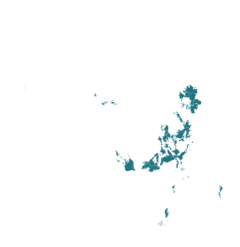
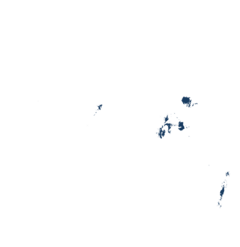
This technology can be used in the colored agro-ecological zones. Any zones shown in white are not suitable for this technology.









| AEZ | Subtropic - warm | Subtropic - cool | Tropic - warm | Tropic - cool |
|---|---|---|---|---|
| Arid | ||||
| Semiarid | ||||
| Subhumid | ||||
| Humid |
Source: HarvestChoice/IFPRI 2009
The United Nations Sustainable Development Goals that are applicable to this technology.
By increasing rice yields and resilience to climate stress, ARICA varieties enhance farmer incomes and contribute to poverty reduction, especially for smallholder farmers who rely on rice production for their livelihoods.
The high yield potential of ARICA varieties directly supports food security by increasing rice production, a staple crop in many African countries.
With ARICA’s increased productivity, rice farming becomes more economically viable, supporting job creation and economic growth in rural areas.
ARICA's pest and disease resistance reduces the need for pesticides and other chemical inputs, supporting more environmentally responsible agricultural practices.
Climate-resilient traits in ARICA varieties, such as tolerance to drought and flooding, enable farmers to adapt to climate change more effectively.
ARICA helps protect ecosystems by reducing the need to expand farmland into natural habitats.
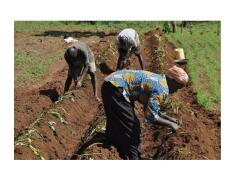
ARICA varieties are cultivated exactly like common rice varieties. For optimal results, follow best soil and fertilizer management prescribed for particular growing areas:
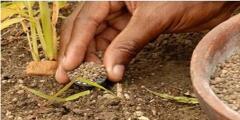
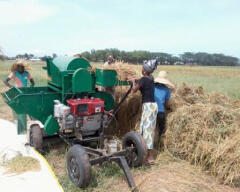
These varieties can be planted manually or mechanically or through transplanting of seedlings from seedbeds into fields.
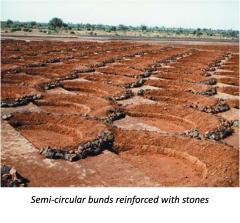
Fields are usually divided into lines or rectangles by constructing bunds which increases rain water accumulation and improves drainage.
Last updated on May 7, 2026
This technology can be used in the colored agro-ecological zones.










ARICA: Advanced rice varieties for Africa
https://taat.africa/gov/technologies/arica-advanced-rice-varieties-for-africa
Last updated on 7 May 2026, printed on Aug 25, 2026
Enquiries e-catalogs@taat.africa