Logo
TAAT e-catalog for government
https://taat.africa/gov/technologies/faw-monitor-and-act-pheromone-guided-integrated-pest-management-ipm-for-summer-maize
Request information View pitch brochure

FAW Monitor-and-Act: Pheromone-Guided Integrated Pest Management (IPM) for Summer Maize

Monitor smart. Spray only when needed. Protect your maize.

FAW Monitor-and-Act is an evidence-based Integrated Pest Management (IPM) solution that supports national efforts to manage Fall Armyworm outbreaks while promoting sustainable agricultural production and environmental protection. The technology provides an alternative to excessive pesticide use by replacing routine spraying schedules with a monitoring-based decision-making approach.

By combining pheromone trap surveillance, field scouting, and targeted insecticide applications, FAW Monitor-and-Act enables more accurate identification of pest pressure and supports timely interventions. The pest monitoring data generated through this approach can contribute to improved extension services, early warning systems, and better coordination of plant health management strategies.

By reducing unnecessary insecticide applications, the technology helps minimize risks to farmers, agricultural workers, beneficial insects, and the environment. FAW Monitor-and-Act supports safer and more sustainable maize production by promoting responsible pesticide management while protecting a critical food security crop.
This technology is not yet validated.

9•3

Scaling readiness: idea maturity 9/9; level of use 3/9

Positive impacts: 12

Intersectional Group

Potential Positive Impacts

Women smallholder maize farmers

  • Safer pest management: Reduced dependence on frequent pesticide spraying lowers women’s exposure to hazardous chemicals, especially when involved in spraying and crop management activities.
  • Improved technical knowledge: Participation in training and demonstrations increases women’s ability to identify pests and apply sustainable management practices.
  • Reduced production risks: Better pest control helps protect household food supply and income from maize production.

Resource-poor smallholder farmers (including vulnerable households)

  • Reduced financial losses: Monitoring-based spraying decreases unnecessary pesticide expenses and protects yields from FAW damage.
  • Improved resilience: Early detection enables farmers to respond more effectively to pest outbreaks and climate-related changes.
  • Access to collective solutions: Farmer groups and lead farmer approaches improve access to knowledge, tools, and support.

Youth farmers and young agricultural entrepreneurs

  • Employment opportunities: Creates roles in pest scouting, advisory services, and agricultural input distribution.
  • Development of technical skills: Builds youth capacity in IPM, monitoring, and precision agriculture practices.
  • Entrepreneurship potential: Supports youth-led businesses providing crop monitoring and advisory services.

Commercial and medium-scale maize farmers

  • Improved profitability: Reduces unnecessary pesticide costs and protects yield potential.
  • Better production quality: Minimizes FAW damage and improves marketable maize quality.
  • Long-term productivity: Supports sustainable insecticide use and resistance management.
More...

Climate adaptability: Moderately adaptable

Monitoring and pest management decisions can be adapted to local conditions, but the technology has only been validated in irrigated summer maize in Lebanon. Local validation is needed in other climates.

Farmer climate change readiness: Moderate improvement

Improves response capacity but requires training and access to monitoring tools.

Biodiversity: Positive impact on biodiversity

Reduces unnecessary pesticide use and protects beneficial organisms.

Carbon footprint: A bit less carbon released

Lowers emissions by reducing pesticide use and spraying frequency.

Environmental health: Greatly improves environmental health

Reduces chemical risks to farmers, consumers, and ecosystems.

Soil quality: Does not affect soil health and fertility

Reduced pesticide use can support healthier soil ecosystems.

Water use: Same amount of water used

Does not directly improve water efficiency but supports sustainable irrigated production.

Problem

  • Pesticide misuse and public health risks: Excessive and unnecessary pesticide applications increase exposure risks for farmers and agricultural workers and may contribute to chemical residues in the food system.
  • Environmental degradation: Frequent broad-spectrum insecticide use can negatively affect beneficial insects, pollinators, natural enemies, and overall ecosystem health.
  • Weak pest surveillance and early warning systems: Limited availability of real-time pest monitoring data makes it difficult to anticipate outbreaks and coordinate timely responses.
  • Threats to national maize production: Fall Armyworm outbreaks can create significant yield gaps and production instability, affecting food security and agricultural resilience.
  • Limited evidence-based decision-making for pest management: Agricultural institutions often lack reliable field-level pest information to guide extension recommendations, optimize interventions, and develop coordinated pest management strategies.

Solution

  • Early warning and surveillance: Generates pest monitoring data to strengthen national surveillance systems and improve outbreak preparedness.
  • Evidence-based decision-making: Supports extension services with reliable information for targeted pest management recommendations.
  • Reduced pesticide risks: Encourages responsible use of environmentally safer insecticides and reduces unnecessary chemical applications.
  • Environmental and public health protection: Minimizes risks to farmers, consumers, beneficial insects, and biodiversity.
  • Sustainable national pest management: Provides a long-term strategy for protecting maize production while strengthening plant health and food security.

Key points to design your project

FAW Monitor-and-Act is a sustainable pest management solution that supports government efforts to protect maize production, strengthen plant health systems, and reduce the negative impacts of excessive pesticide use. By combining early planting, pheromone-based monitoring, field scouting, and targeted insecticide applications, the technology improves pest surveillance, promotes responsible pesticide management, and enhances climate-resilient maize production. It contributes to SDG 2 (Zero Hunger) by protecting maize yields and farmer livelihoods, SDG 12 (Responsible Production and Consumption) by reducing unnecessary pesticide use, SDG 3 (Good Health and Well-being) by lowering chemical exposure risks, and SDG 17 (Partnerships) through collaborative implementation models.

The technology also supports inclusive and sustainable agricultural development by reducing farmers’ exposure to hazardous pesticides and improving access to pest management knowledge, including through farmer training and demonstration activities. By enabling farmers to adapt pest management decisions to changing seasonal conditions, FAW SmartTrap strengthens climate resilience while reducing the environmental footprint associated with unnecessary pesticide applications.

Key project activities to plan:

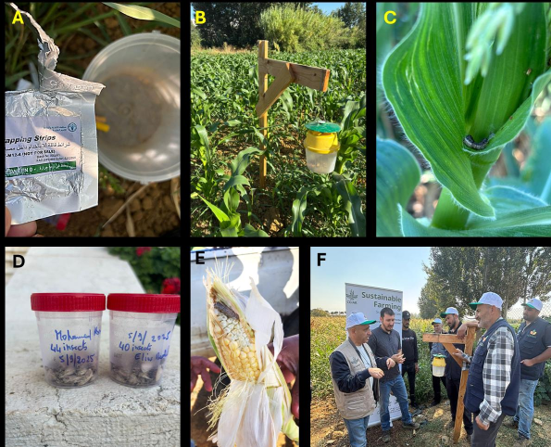
  • Establish enabling conditions: Ensure access to irrigated maize production systems, adapted varieties, pheromone traps, FAW lures, registered crop protection products, sprayers, and safety equipment.
  • Implement FAW monitoring systems: Install pheromone traps, conduct regular pest surveillance, and collect field data to support early warning and timely interventions.
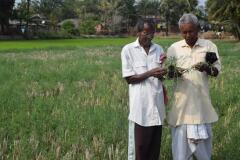
  • Strengthen extension capacity: Train extension agents, lead farmers, and farmers on FAW identification, monitoring, and integrated pest management practices.
  • Promote farmer awareness and adoption: Use demonstration plots, field days, and innovation platforms to showcase benefits and encourage wider uptake.
  • Build institutional partnerships: Coordinate efforts among research institutions, extension services, private-sector suppliers, and farmer organizations.

Key implementation partners: Research organizations such as ICARDA and LARI, CGIAR Plant Health Initiative, national extension services, private-sector input suppliers, and local farmer networks are essential for technology delivery, training, and scaling.

IP

Open source / open access

Scaling Readiness describes how complete a technology's development is and its ability to be scaled. It produces a score that measures a technology's readiness along two axes: the level of maturity of the idea itself, and the level to which the technology has been used so far.

Each axis goes from 0 to 9 where 9 is the “ready-to-scale” status. For each technology profile in the e-catalogs we have documented the scaling readiness status from evidence given by the technology providers. The e-catalogs only showcase technologies for which the scaling readiness score is at least 8 for maturity of the idea and 7 for the level of use.

The graph below represents visually the scaling readiness status for this technology, you can see the label of each level by hovering your mouse cursor on the number.

Read more about scaling readiness ›

Scaling readiness score of this technology

Maturity of the idea 9 out of 9

Uncontrolled environment: validated

Level of use 3 out of 9

By the whole project team + project partners

Maturity of the idea Level of use
9
8
7
6
5
4
3
2
1
1 2 3 4 5 6 7 8 9

Key recommendations

The potential benefits for women, youth, and vulnerable households are anticipated impacts, not measured outcomes.

Positive impact 12

Intersectional Group

Potential Positive Impacts

Women smallholder maize farmers

  • Safer pest management: Reduced dependence on frequent pesticide spraying lowers women’s exposure to hazardous chemicals, especially when involved in spraying and crop management activities.
  • Improved technical knowledge: Participation in training and demonstrations increases women’s ability to identify pests and apply sustainable management practices.
  • Reduced production risks: Better pest control helps protect household food supply and income from maize production.

Resource-poor smallholder farmers (including vulnerable households)

  • Reduced financial losses: Monitoring-based spraying decreases unnecessary pesticide expenses and protects yields from FAW damage.
  • Improved resilience: Early detection enables farmers to respond more effectively to pest outbreaks and climate-related changes.
  • Access to collective solutions: Farmer groups and lead farmer approaches improve access to knowledge, tools, and support.

Youth farmers and young agricultural entrepreneurs

  • Employment opportunities: Creates roles in pest scouting, advisory services, and agricultural input distribution.
  • Development of technical skills: Builds youth capacity in IPM, monitoring, and precision agriculture practices.
  • Entrepreneurship potential: Supports youth-led businesses providing crop monitoring and advisory services.

Commercial and medium-scale maize farmers

  • Improved profitability: Reduces unnecessary pesticide costs and protects yield potential.
  • Better production quality: Minimizes FAW damage and improves marketable maize quality.
  • Long-term productivity: Supports sustainable insecticide use and resistance management.

Unintended impact 12

Intersectional Group

Potential Unintended Impacts

Mitigation Measures

Women smallholder maize farmers

  • Increased workload: Regular trap monitoring may add responsibilities to existing household and farm duties.
  • Limited access to training: Women may miss technical activities due to time, mobility, or social constraints.
  • Limited decision-making power: Women may not control decisions on purchasing inputs or adopting new practices.
  • Schedule inclusive training: Organize activities at times and locations accessible to women.
  • Promote household-inclusive approaches: Engage both women and men in pest management decisions.
  • Strengthen women’s access to services: Link women farmers with extension programs and farmer organizations.

Resource-poor smallholder farmers

  • Initial adoption costs: Purchasing traps, lures, and inputs may be difficult.
  • Risk of exclusion: Farmers without access to extension services may not benefit equally.
  • Dependence on external support: Adoption may decline if project support ends.
  • Promote collective access models: Encourage shared traps, group monitoring, and cooperative purchasing.
  • Integrate into extension systems: Ensure continued technical support beyond projects.
  • Develop affordable packages: Adapt technology delivery models to low-resource farmers.

Youth farmers and entrepreneurs

  • Limited access to startup resources: Youth may lack capital to invest in monitoring services.
  • Skills gaps: Technical knowledge may be insufficient for providing quality services.
  • Uncertain market demand: New service businesses may take time to become profitable.
  • Provide entrepreneurship support: Link youth to training, financing, and business opportunities.
  • Offer technical mentorship: Build capacity in IPM and advisory services.
  • Create partnerships: Connect youth service providers with farmer groups and agribusinesses.

Commercial and medium-scale farmers

  • Resistance to changing practices: Farmers accustomed to routine spraying may hesitate to adopt monitoring-based approaches.
  • Short-term adjustment costs: New monitoring systems require investment and learning.
  • Reliance on quality input supply: Poor availability of lures or products may affect implementation.
  • Demonstrate economic benefits: Use field trials to show cost savings and improved outcomes.
  • Develop reliable supply chains: Strengthen availability of monitoring tools and inputs.
  • Provide technical support: Offer advisory services during transition.

Barriers 12

Intersectional Group

Adoption Barriers

Mitigation Measures

Women smallholder maize farmers

  • Limited access to extension services and training opportunities.
  • Financial constraints limiting purchase of inputs.
  • Low influence over farm investment decisions.
  • Design gender-responsive extension approaches.
  • Promote group-based access to inputs and services.
  • Include women in household and community decision-making processes.

Resource-poor smallholder farmers

  • High perceived cost of adoption.
  • Limited access to monitoring tools and technical advice.
  • Preference for familiar pesticide-based practices.
  • Use farmer demonstrations and lead farmers to build trust.
  • Support collective purchasing and shared equipment models.
  • Integrate technology into public extension programs.

Youth farmers and entrepreneurs

  • Limited awareness of business opportunities.
  • Lack of technical and business skills.
  • Difficulty accessing startup resources.
  • Promote youth-led monitoring and advisory services.
  • Provide technical and entrepreneurship training.
  • Facilitate access to partnerships and financing.

Commercial and medium-scale farmers

  • Perception that monitoring is slower than routine spraying.
  • Limited availability of specialized services.
  • Uncertainty about economic returns.
  • Provide evidence from demonstration farms.
  • Develop professional IPM service providers.
  • Promote cost-benefit analysis and farm-level results.

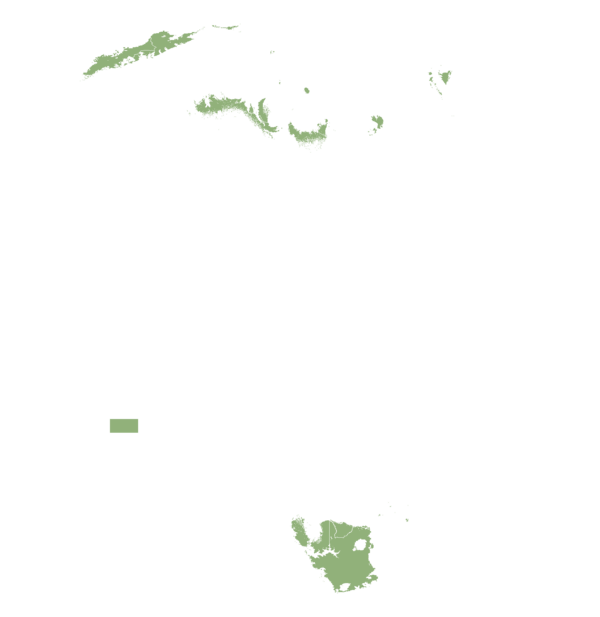
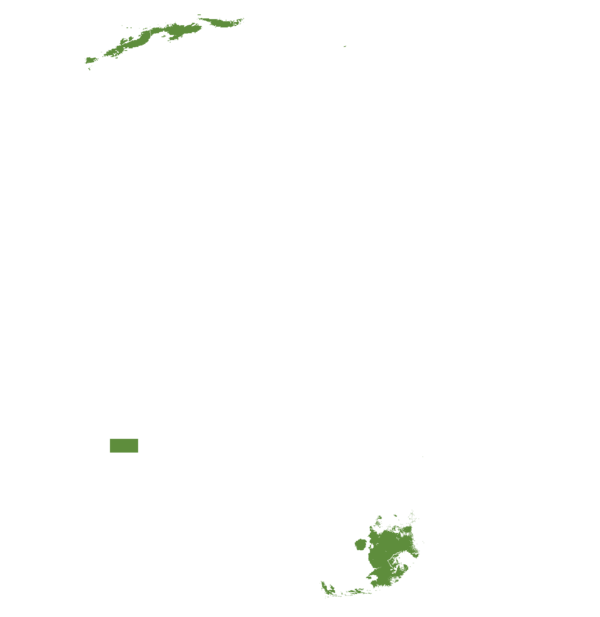
Countries with a green colour
Tested & adopted
Countries with a bright green colour
Adopted
Countries with a yellow colour
Tested
Countries with a blue colour
Testing ongoing
Egypt Equatorial Guinea Ethiopia Algeria Angola Benin Botswana Burundi Burkina Faso The Democratic Republic of the Congo Djibouti Côte d'Ivoire Eritrea Gabon Gambia Ghana Guinea Guinea-Bissau Cameroon Kenya Libya Liberia Madagascar Mali Malawi Morocco Mauritania Mozambique Namibia Niger Nigeria Congo Rwanda Zambia Senegal Sierra Leone Zimbabwe Somalia South Sudan The Republic of the Sudan South Africa Eswatini Tanzania, United Republic Togo Tunisia Chad Uganda Western Sahara Central African Republic Lesotho
Countries where the technology is being tested or has been tested and adopted
Country Testing ongoing Tested Adopted
Lebanon –No ongoing testing Tested –Not adopted

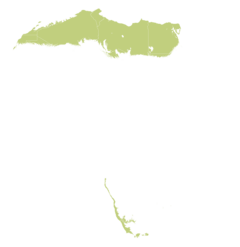
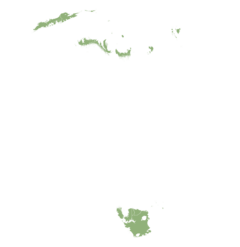
This technology can be used in the colored agro-ecological zones. Any zones shown in white are not suitable for this technology.
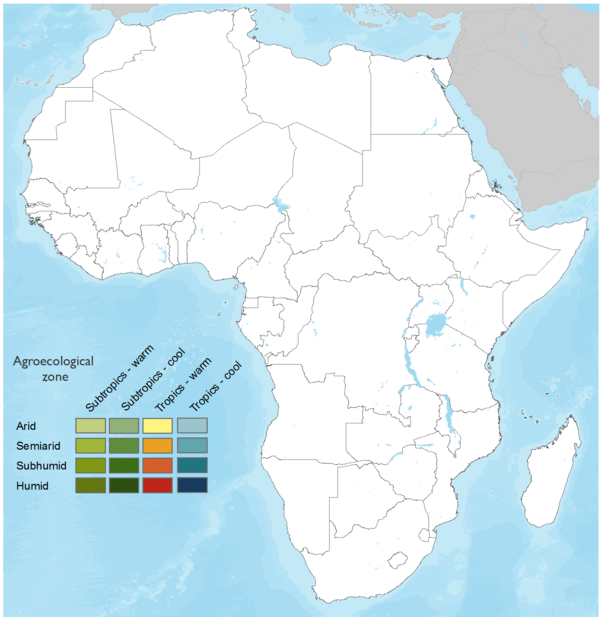
Agro-ecological zones where this technology can be used
AEZ Subtropic - warm Subtropic - cool Tropic - warm Tropic - cool
Arid – –
Semiarid – –
Subhumid – – – –
Humid – – – –

Source: HarvestChoice/IFPRI 2009

The United Nations Sustainable Development Goals that are applicable to this technology.
Sustainable Development Goal 2: zero hunger
Goal 2: zero hunger

Protects maize yields and strengthens food security by reducing FAW-related losses.
Sustainable Development Goal 3: good health and well-being
Goal 3: good health and well-being

Reduces farmers’ exposure to unnecessary pesticide applications.
Sustainable Development Goal 12: responsible production and consumption
Goal 12: responsible production and consumption

Promotes efficient pesticide use through monitoring-based decisions.
Sustainable Development Goal 15: life on land
Goal 15: life on land

Reduces impacts on biodiversity by limiting unnecessary pesticide applications.
Sustainable Development Goal 17: partnerships for the goals
Goal 17: partnerships for the goals

Supports collaboration among research institutions, extension services, farmers, and private sector actors.

Step 1: Establish the crop early
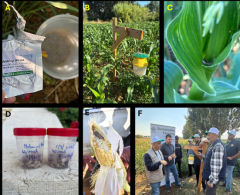
Plant irrigated summer maize early where agronomically suitable and according to local recommendations. Early planting helps the crop avoid the periods of highest Fall Armyworm pressure and reduces exposure to severe infestations.

Step 2: Install pheromone monitoring traps
Approximately five days after planting, install FAW pheromone traps in the field at a recommended density (about one trap per hectare). Use commercially available pheromone lures that are officially registered or recommended for FAW monitoring.

Step 3: Monitor pest activity regularly
Check the traps twice per week to record the number of captured FAW male moths and observe any non-target insects. At the same time, scout maize plants for FAW larvae, feeding damage, and signs of infestation on leaves, whorls, and ears.

Step 4: Identify pest risk periods
Combine pheromone trap results with field scouting observations to determine when pest pressure is increasing and whether crop protection measures are required. Trap catches should be interpreted together with crop damage observations rather than used as a fixed spraying calendar.

Step 5: Apply control measures only when needed
When monitoring indicates that intervention is necessary, apply only nationally registered FAW control products at the recommended rate, using properly calibrated equipment and appropriate personal protective equipment. Treatments should be based on field conditions and pest pressure, not on routine schedules.

Step 6: Apply insecticide rotation strategies
Rotate insecticides with different modes of action to maintain their effectiveness and reduce the risk of Fall Armyworm developing resistance. Product selection should always follow current national registration requirements and extension recommendations.

Step 7: Reassess after treatment
Continue monitoring trap captures and crop conditions after application. If pest pressure remains high, reassess the need for additional treatments based on new monitoring information and observed crop damage before applying any follow-up intervention.

Step 8: Record and share results
Maintain records of trap counts, scouting observations, pest management decisions, products applied, application dates, crop damage levels, and harvest performance. Share lessons learned through farmer field days and local knowledge-sharing activities to support wider adoption of effective FAW management practices.

Downloads

Last updated on Sep 10, 2026